

How quickly can an interim CFO start is the immediate question for founders, CEOs, COOs and board members when a company faces a sudden financial leadership gap, an urgent capital raise, M&A activity or a cash-flow crisis. In practice an interim CFO can be operational within 24–72 hours for critical stabilization tasks and produce visible, investor-grade outcomes inside 30 days; fuller programmatic impact (governance, FP&A redesign, due diligence readiness) typically takes 30–90 days, with durable embedding and handover to a permanent CFO in 90–180 days. The real timing depends on the situation—degree of disruption, quality of financial systems, board expectations and whether the engagement is structured as an emergency activation, a part-time fractional CFO model, or a full-time interim placement.
Below is an authoritative, practical guide that maps precise near-term actions to common business situations and leadership decision points. It explains what an interim CFO does by day 1, week 1, and month 1, outlines the milestones investors expect during a transition, and provides the selection, contracting and governance framework leaders need to accelerate results while preserving board confidence.
Transition: Start by understanding the truly urgent things an interim CFO must do in the first hours and days when a company has no senior finance leader in place.
Immediate activation: how an interim CFO can start in 24–72 hours
When a CFO position is suddenly vacated or a crisis hits, the priority is to minimize risk to liquidity and reputation. An interim CFO can start delivering value almost instantly because the first tasks require judgment, authority and experience more than deep company-specific knowledge. Expect operational presence within 24–72 hours with these objectives: protect cash, secure banking relationships, stabilize reporting, and communicate to stakeholders.
Rapid onboarding checklist: what they need to act immediately
A pragmatic interim CFO needs a focused set of access and inputs to make decisions fast. Typical immediate requirements:
- Executive authority memo and signatures—clarifies who can approve payments and make bank-level changes.
- Access to bank accounts, treasury platforms and payment interfaces.
- Last closed monthly financials and the most recent cash position with bank statements.
- High-level cap table, investor contact list and any existing covenant schedules.
- A rapid risk brief from the acting CEO or COO: payroll timing, vendor deadlines, tax payments, and any imminent debt covenants.
With these items in place, an interim CFO can triage within hours, identify immediate cash gaps, and implement stop-gap controls to prevent further deterioration.
Stabilizing cash and banking: first-day priorities
Cash is the single most urgent metric. Immediate actions usually include:
- Confirming cash balances and clearing incoming funds—determine float timing and any receivables that can be accelerated.
- Pausing non-essential disbursements and instituting approvals for high-dollar payments.
- Establishing or resetting overdraft lines and short-term liquidity facilities if available.
- Communicating with banks and lenders to put them on notice and negotiate temporary relief if covenants are at risk.
Cash flow here is defined as available cash and near-term inflows; the goal is to create a 14–30 day runway and clear the decision rights for spending.
Stakeholder triage and immediate board reporting
Investor and board confidence collapses fast if they lack timely information. The interim CFO’s opening communications are as important as actions:
- Draft a concise situation memo for the board and key investors within 48 hours: current cash, near-term obligations, immediate risks and initial stabilization steps.
- Set expectations: what will be delivered in 7 days, 30 days, and 90 days.
- Establish a rhythm for daily or weekly updates until stabilization is confirmed.
These communications reduce uncertainty and buy time for the interim CFO to diagnose deeper problems.
Transition: Once immediate stabilization is underway, the next phase addresses diagnostic depth—what must be fixed to stop recurrence and reassure stakeholders.
First 30 days: triage, assessment, and visible stabilizing outcomes
The first 30 days are fundamentally diagnostic and tactical. An interim CFO turns triage into a prioritized action plan that produces visible outcomes investors and boards expect: a reliable cash forecast, quick wins in financial controls, and a credible plan for the next quarter.
Diagnostic financial review: the rapid 30-day audit
Within the first month an interim CFO should complete a pragmatic financial diagnostic focused on the highest-value areas:
- Revenue quality: Validate bookings versus recognized revenue, identify deferred revenue issues, and assess customer concentration risk.
- Expense structure: Separate fixed from variable costs and identify immediate reduction opportunities that don’t damage growth delivery.
- Working capital: Analyze receivables aging, inventory turnover (if applicable), and payable terms to identify cash conversion improvements.
- Controls and compliance: Surface missing reconciliations, payroll risks, tax exposure, and internal control breakdowns that could lead to restatements or audit issues.
This review is not a forensic audit but a high-return, high-speed assessment that produces a prioritized remediation backlog.
Cashflow and liquidity playbook: 30-day deliverables
Deliverables that materially change the company’s near-term profile in 30 days include:
- A rolling 13-week cash forecast with scenario planning (best case, expected case, downside) explaining assumptions and sensitivity to customer churn or funding delays.
- Tactical working capital measures: negotiated extended payment terms with suppliers, accelerated collections, and concise AR escalation playbook.
- Interim treasury controls: daily cash reporting, a centralized payments schedule and delegated approval thresholds to prevent rogue outflows.
Investors expect clarity on runway and specific actions to extend it. The interim CFO’s ability to produce a defensible 13-week forecast is often the single decisive deliverable in this phase.
Controls remediation quick wins
Quick wins in controls both reduce risk and restore confidence. Examples:
- Segregation of duties for payments and reconciliations—implement temporary dual approvals for large disbursements.
- Monthly close stabilization—standardize close checklist and assign ownership for bank reconciliations and balance sheet reviews.
- Vendor audit—review top 20 vendors for pricing, service level, and payment terms to identify immediate savings.
These fixes prevent the same crisis from recurring and demonstrate leadership competence to the board and investors.
Transition: After stabilizing the finance function in month one, an interim CFO shifts toward strategic deliverables that align operations with investor milestones like M&A, fundraising or IPO readiness.
30–90 days: implementation, investor confidence, and operational alignment
Between month 1 and month 3 the interim CFO executes on longer-lived programs that build investor confidence and restore the company’s strategic momentum. This is where financial leadership starts to materially affect valuation discussions for a capital raise, support due diligence in an M&A process, or prepare for formal audits or investor reviews.
M&A and due diligence readiness
For companies in active sale processes or strategic fundraising, the interim CFO must harden the finance function to withstand buyer or investor scrutiny:
- Prepare standardized data rooms with clean financial statements, schedules for revenue recognition, customer contracts and key KPIs.
- Ensure audited or audit-ready financials where required, resolving material reconciling items and providing supporting documentation for significant balance sheet accounts.
- Create an EBITDA bridge and normalized operating metrics—explain one-time items, founder transactions, and non-recurring expenses in plain language.
Due diligence is as much about transparency and narrative as it is about numbers. The interim CFO anticipates common buyer questions—customer churn drivers, durable gross margin, and cost structure scalability—and prepares defensible answers.
Capital raise preparation and investor requirements
Investors in a Series A–C or a private-equity process expect robust controls, predictable forecasting and clear indicators of growth unit economics. The interim CFO’s role includes:
- Enhancing FP&A capabilities: establish a monthly re-forecast process, scenario-based models and a set of investor-grade KPIs (LTV:CAC for SaaS, contribution margin for product businesses).
- Building the narrative: translate operational KPIs into financial outcomes—how much incremental capital drives ARR growth, margin improvement or expansion into new markets.
- Preparing investor deliverables: data room, due diligence Q&A, and a concise financial model that underpins valuation assumptions.
Investors want to see that the finance leader can both defend historical performance and forecast future cash needs with discipline. A strong interim CFO turns messy books into credible models within 60–90 days.
FP&A, forecast and KPI alignment with operations
Operational alignment is critical to ensure estimates are realistic and execution is measurable. The interim CFO will:
- Institute a rolling forecast rhythm tied to operational milestones and sales pipeline metrics.
- Reconcile sales bookings to revenue recognition and ensure consistent KPI definitions across finance, sales and product teams.
- Create a concise dashboard for the board: cash runway, EBITDA trajectory, gross margin trends, and three leading indicators tied to revenue growth.
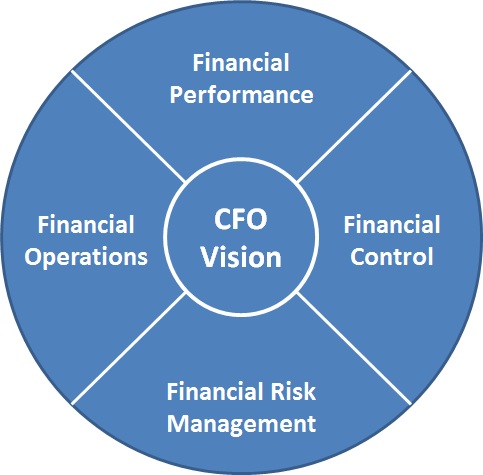
Clarity and consistency in reporting reduce surprises and allow executives and the board to make confident strategic decisions.
Transition: With operational and investor needs addressed, the interim CFO focuses on durable governance and preparing the organization for a permanent finance leader.
90–180 days: embedding governance and enabling a permanent CFO hire
By months three to six the interim CFO’s objective is to convert short-term gains into durable processes, governance and organizational capability so the business is attractive to investors and ready for a long-term CFO hire. This phase combines people, process and systems work.
Building board reporting and governance
Robust governance institutionalizes confidence. Typical initiatives include:
- Formalizing board packets: a consistent deck format, KPIs, variance analysis and a concise executive summary.
- Establishing an audit and finance committee charter where applicable and defining cadence and agenda for financial reviews.
- Implementing policy frameworks for capital expenditures, expense approvals and related-party transactions.
These actions reduce friction during investor interactions, improve auditability and set clearer expectations for the next CFO.
Operational improvements and working capital optimization
Longer-term improvements that materially increase free cash flow include:
- Automation of routine processes: AP/AR automation, bank feed reconciliations and expense management systems to reduce error and cycle time.
- Vendor renegotiation and strategic sourcing to lower recurring costs and improve service levels.
- Reengineering revenue recognition and billing processes to tighten billing cycles and reduce days sales outstanding (DSO).
Optimizing working capital—the cash tied in receivables, inventory and payables—creates persistent benefits to runway and valuation.
Succession planning and handover to permanent CFO
Preparing for a permanent CFO requires an intentional handover plan:
- Documentation: maintain a single source of truth for all financial models, policies, disclosures and internal controls.
- Talent development: assess the finance team, fill critical gaps, and name owners for ongoing FP&A, accounting and treasury tasks.
- Transition timeline: agree on a handover period where the interim remains available for advisory and to support board introductions.
Successful handovers are not abrupt; they are phased to ensure continuity of relationships with banks, auditors and investors.
Transition: Beyond operational timelines, leaders must understand the business models and fee structures when engaging an interim CFO and choose the appropriate delivery model.
Practical engagement models and commercial terms
Choosing how to engage an interim CFO impacts speed and scope: emergency full-time activation is different from a part-time fractional CFO or a project-specific consultant. The right model depends on urgency, budget and expected deliverables.
Interim versus fractional versus project CFO
Definitions and when to choose each:
- Interim CFO (full-time, short-to-medium-term): best for sudden departures, crises, or when a permanent hire is delayed. Provides hands-on leadership and accountability.
- Fractional CFO (part-time): suitable for companies needing strategic oversight and FP&A but without the budget for a full-time hire; effective for steady-state advisory and incremental improvements.
- Project CFO (scope-limited): engaged for a defined workstream such as M&A due diligence, audit readiness or a capital raise.
Each model trades off depth of involvement, continuity and cost.
Contract length, retainers and fee structures
Commercial arrangements should align incentives and clarify deliverables. Common structures:
- Daily or weekly rates for emergency full-time coverage with a minimum engagement period (often 30–90 days).
- Monthly retainer for fractional arrangements with a defined hour commitment and a specified set of deliverables.
- Success fees tied to specific outcomes—e.g., completion of a capital raise, receipt of purchase agreement in M&A, or achieving a runway extension—paired with a base retainer.
Clarity around termination clauses, notice periods and IP/knowledge transfer obligations prevents disputes during high-stress transitions.
KPIs and deliverables to tie payments to outcomes
To ensure alignment, structure payment around measurable milestones such as:
- Delivery of a 13-week cash forecast within 10 business days.
- Reduction of DSO by X days or negotiation of supplier terms improving cash by $Y.
- Preparing a clean data room and financial model sufficient to support due diligence within a defined timeframe.
These metrics make the engagement results-driven and give the board a factual basis to evaluate progress.
Transition: Selecting the right interim CFO is quicker when you use a simple decision framework that clarifies urgency, required skills and cultural fit.
Decision framework for selecting and activating an interim CFO
Leaders must move fast but not carelessly. Use interim chief financial officer to decide whether to hire an interim CFO now, and how to choose the right candidate.
When to call an interim CFO immediately
Immediate activation is warranted in these situations:
- Sudden CFO departure or extended absence with no qualified in-house successor.
- Imminent payroll, tax, or supplier payments in jeopardy.
- Active M&A or capital raise that requires investor-grade financials within weeks.
- Audit or compliance exposure that threatens business continuity or valuation.
If any of these are present, treat the situation as a priority incident—delay increases cost and reputational risk.
How to evaluate candidates quickly
Evaluate candidates against three axes: technical competence, situational experience and leadership fit.
- Technical competence: track record with accounting standards, treasury management and FP&A. Ask for examples of 13-week cash forecasting and debt covenant negotiation.
- Situational experience: prior work in turnaround, M&A, fundraising or in your industry is highly predictive of speed and quality of outcomes.
- Leadership and communication: ability to present to boards and investors, manage teams under stress, and build trust with founders and banks.
Reference checks should focus on outcomes achieved under time pressure and relationships with auditors, bankers and investors.
Board and founder alignment checklist
Before onboarding, get alignment on these items:
- Scope and authority: sign-off matrix and delegated powers for the interim CFO to act decisively.
- Decision rights between CEO and interim CFO for cash decisions and vendor negotiations.
- Communication protocol with investors and the board to avoid mixed messages.
- Success criteria and expected timeline for handover to a permanent CFO.
Clear alignment speeds action and prevents political friction that can undermine even effective interim leaders.
Transition: Summarize the path forward with concise, actionable steps leaders can implement today.
Concise summary and actionable next steps for business leaders
How quickly an interim CFO can start depends on urgency, access to information and the engagement model, but practical reality: emergency activation and visible stabilization can begin in 24–72 hours; credible investor-ready deliverables arrive within 30–90 days; and full embedding and handover occur in 90–180 days. The choice between interim, fractional and project CFOs should be driven by the specific situation—crisis, fundraising, M&A or governance uplift.
Actionable next steps:
- If facing imminent cash or compliance risk: initiate emergency activation now. Assemble the rapid onboarding checklist (access to bank, last financials, payroll and vendor deadlines).
- If preparing for a capital raise or sale within 90 days: engage an interim or project CFO with proven M&A and investor readiness experience; require a 13-week cash forecast and clean data room within the first 30–60 days.
- For steady-state growth needing strategy and controls: consider a fractional CFO to build FP&A discipline, KPI governance and board reporting over a 3–6 month program.
- When selecting a candidate: prioritize situational experience and references showing measurable outcomes under time pressure; define authority, deliverables and a clear handover plan in the contract.
Immediate clarity about the problem you need solved—liquidity, fundraising, M&A readiness or governance—reduces time-to-impact. The right interim CFO is not just a stopgap; they are the bridge from crisis or transition to a stronger, investor-ready organization. Engage decisively, measure outcomes, and align the board and management around the timetable for stabilization and the eventual permanent hire.